

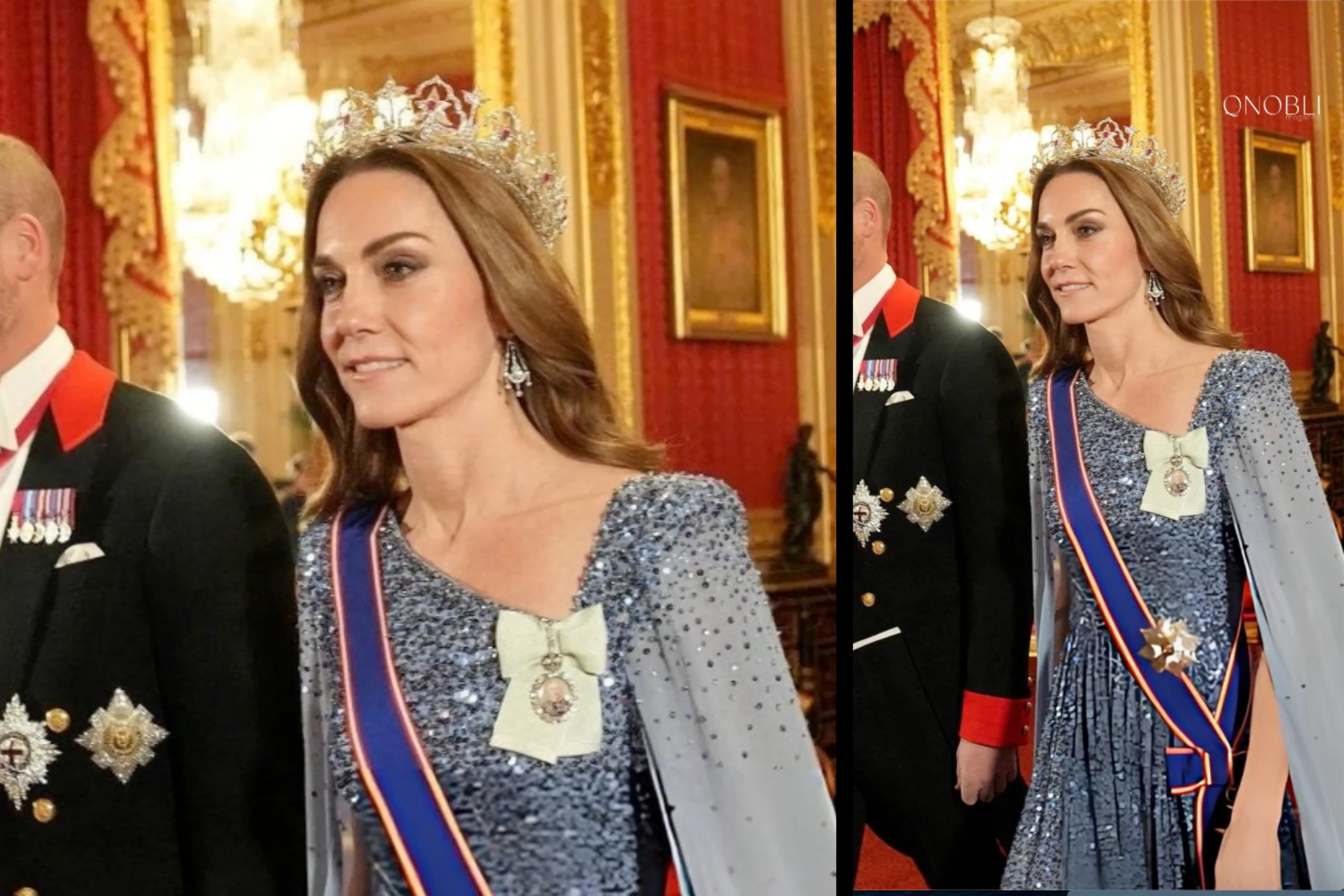
On the evening of 3 December 2025, Windsor Castle hosted an elegant State Banquet in honour of the official visit of German President Frank-Walter Steinmeier and his wife. The ceremony brought together the British Royal Family and international dignitaries in an event that blends protocol, tradition and the subtleties of diplomacy — but which also drew attention for the grand return of royal fashion to centre stage.
For the occasion, Kate Middleton delivered one of her most talked-about appearances in recent years. The Princess chose a bespoke Jenny Packham gown — floor-length, with a train and shimmering details — perfectly suited to the formal white-tie dress code. The look alone would already have captured attention, but it was her choice of jewellery that turned her entrance into a historic moment.
Kate wore the Oriental Circlet Tiara for the very first time, originally created for Queen Victoria in 1853. The tiara, a piece of immense symbolic and historical value, had not been seen in public since 2005 — and now reappears with the future Queen Consort. Adorned with diamonds and rubies, its return to the royal spotlight during the banquet highlighted the symbolic power of the jewel, which carries centuries of tradition.
The choice of this tiara holds particular significance: as it is considered a Crown heirloom traditionally reserved for sovereigns or senior future consorts, the gesture of allowing Kate to wear it now seems to reaffirm her prominence within the monarchy — a moment of affirmation and historical continuity.
The banquet also offered a meticulously staged scene: the castle’s Christmas decorations, the historic table setting, the ceremonial grandeur and the distinguished guest list all combined to create a portrait of British tradition, but also of modern diplomacy. For many observers, the event demonstrated that the Royal Family still knows how to blend heritage with contemporary relevance.
More than a social event or a fashion display, this banquet — and Kate Middleton’s look — symbolises how the monarchy engages with its own history, memory and public image, balancing past and present, elegance, status and symbolic responsibility.
And moments like this reveal that fashion — especially at its most prestigious — is not merely about fabrics and jewels: it is about identity, narrative and the representation (or reinvention) of power. And at Windsor in 2025, history was worn.


