

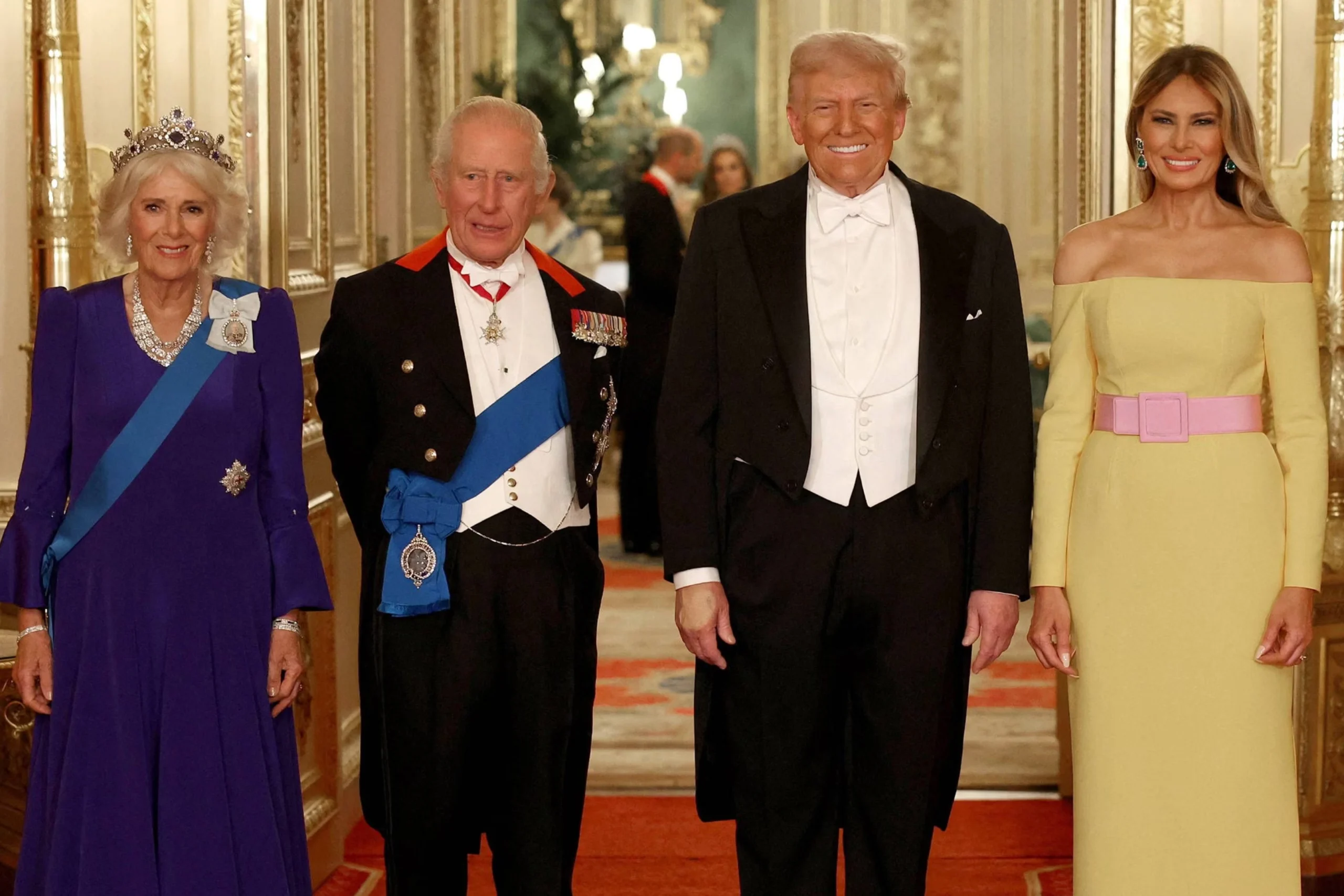
Image from REUTERS
Last week, the British Royal Household hosted a state banquet at Windsor Castle, bringing together around 160 heavyweight guests — among them Tim Cook (Apple CEO), Jensen Huang (Nvidia), Steve Schwarzman (Blackstone), Rene Haas (Arm) and Rupert Murdoch. This gathering comes at a pivotal moment, as both the US and the UK seek to strengthen joint agreements in the fields of technology, energy and digital assets.
The presence of such corporate leaders signifies far more than social etiquette: it signals that strategic sectors — semiconductors, AI infrastructure, and alternative finance — are firmly in the spotlight of diplomatic partnerships. At the banquet, themes such as cooperation in technological investment, regulation, supply chain resilience and energy security featured prominently in speeches and bilateral conversations.
For companies of this calibre, attending such events reinforces their influence over global decisions that shape markets, regulations and investments. For high-net-worth consumers, entrepreneurs and investors, it suggests that structural changes are under way: new policies are expected to encourage growth in sectors such as AI, clean energy, data centres, cryptocurrencies and digital infrastructure, with direct implications for capital allocation, expansion planning and regulatory risk management.
Ultimately, this kind of gathering underscores how diplomacy and business move hand in hand. When figures such as Cook, Huang or Haas share tables with heads of state, what is at stake is less about protocol and more about the framework of global cooperation that may determine who leads the next technological and energy wave. And in a world where credibility, scale and agility matter immensely, being present in the background of such decisions is an asset in itself.


