

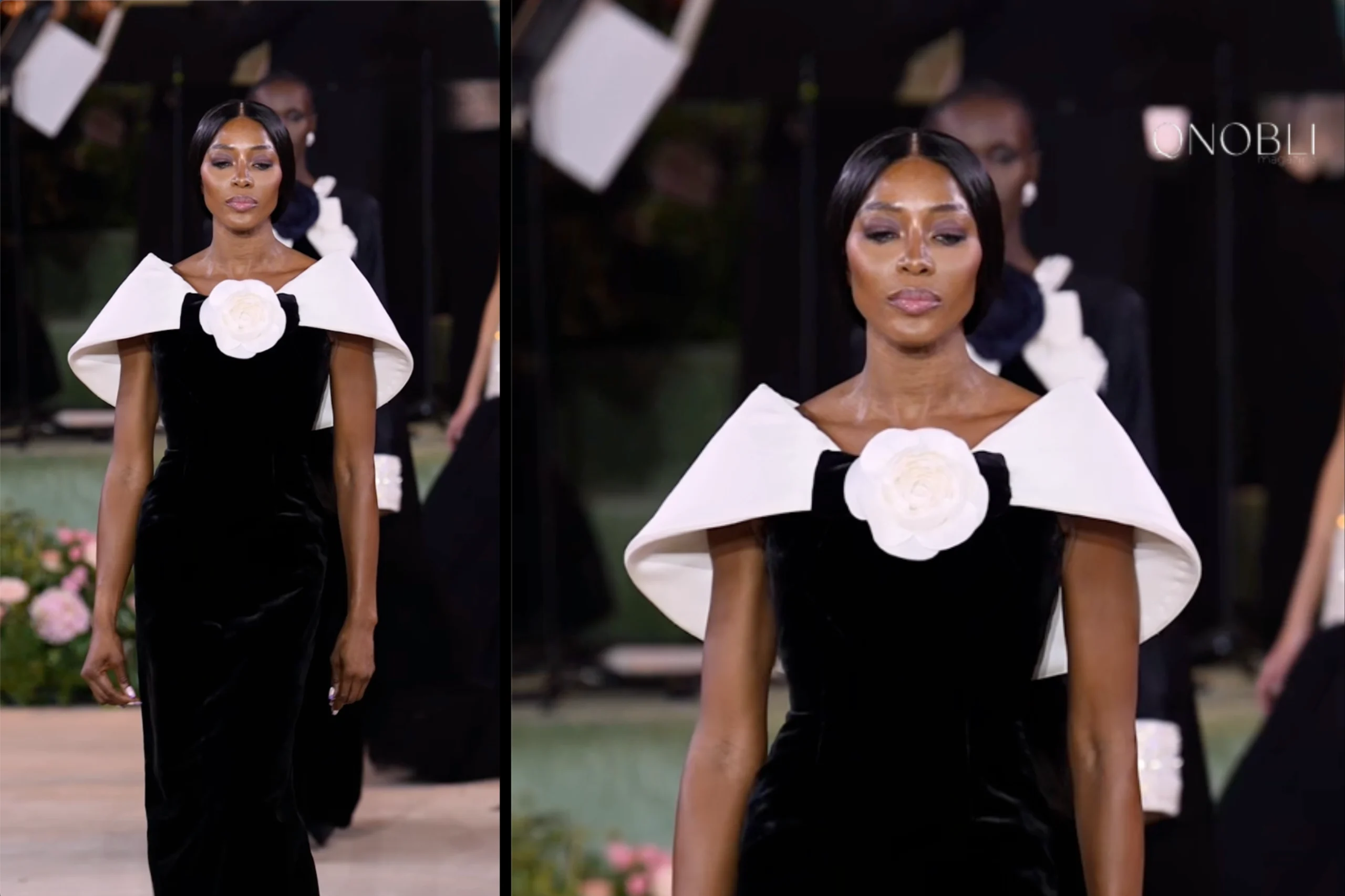
On the third day of London Fashion Week Spring/Summer 2026, Richard Quinn unveiled a collection that reasserts his mastery in the realm of dramatic eveningwear, blending opulence, theatricality and sophistication. The spectacle took place at Smith Square Hall in Westminster, a fitting stage for a presentation that combined a live orchestra, choir, refined lighting, and gowns worthy of haute couture.
Supermodel Naomi Campbell became the muse-moment of the night, opening the show in a black velvet column gown with a sculptural white structured collar and a white camellia fixed at the bust — a look that married couture rigour with visual romanticism, serving as a powerful introduction to the collection’s theme, which Richard Quinn titled The Grandeur of Occasion Dressing.
The runway delivered numerous looks that echoed old-world glamour: oversized bows, roses applied to necklines, voluminous tulle skirts, graduated floral embroidery and a meticulous use of fabrics exploring contrasts between deep black and soft tones such as lilac, light blue and cream. There was a deliberate tension between extravagance and refinement: while many gowns were spectacular and heavily ornamented, some of the most memorable moments came when Quinn softened his signature, allowing details to speak through textures, embellishments and clean silhouettes.
The use of a live orchestra and choir lent the show the aura of a modern opera, synchronising the rhythm of gowns and movements on stage with the music, transforming the presentation into an almost ritualistic experience. The delay of more than an hour before the start was easily forgiven, as the ambience, floral setting and lighting effects — combined with Naomi Campbell’s iconic presence — more than compensated for the wait.
For those operating within the luxury business universe, this show reinforced long-discussed certainties: the value of personal branding, the enduring appeal of iconic figures such as Naomi Campbell — who at 55 continues to assert her relevance — and the importance of productions that do more than simply sell clothes, but instead create narrative, atmosphere and desire. Richard Quinn did not merely present garments; he offered aspirationality, demonstrating how fashion can be both spectacle and symbolic investment.


