

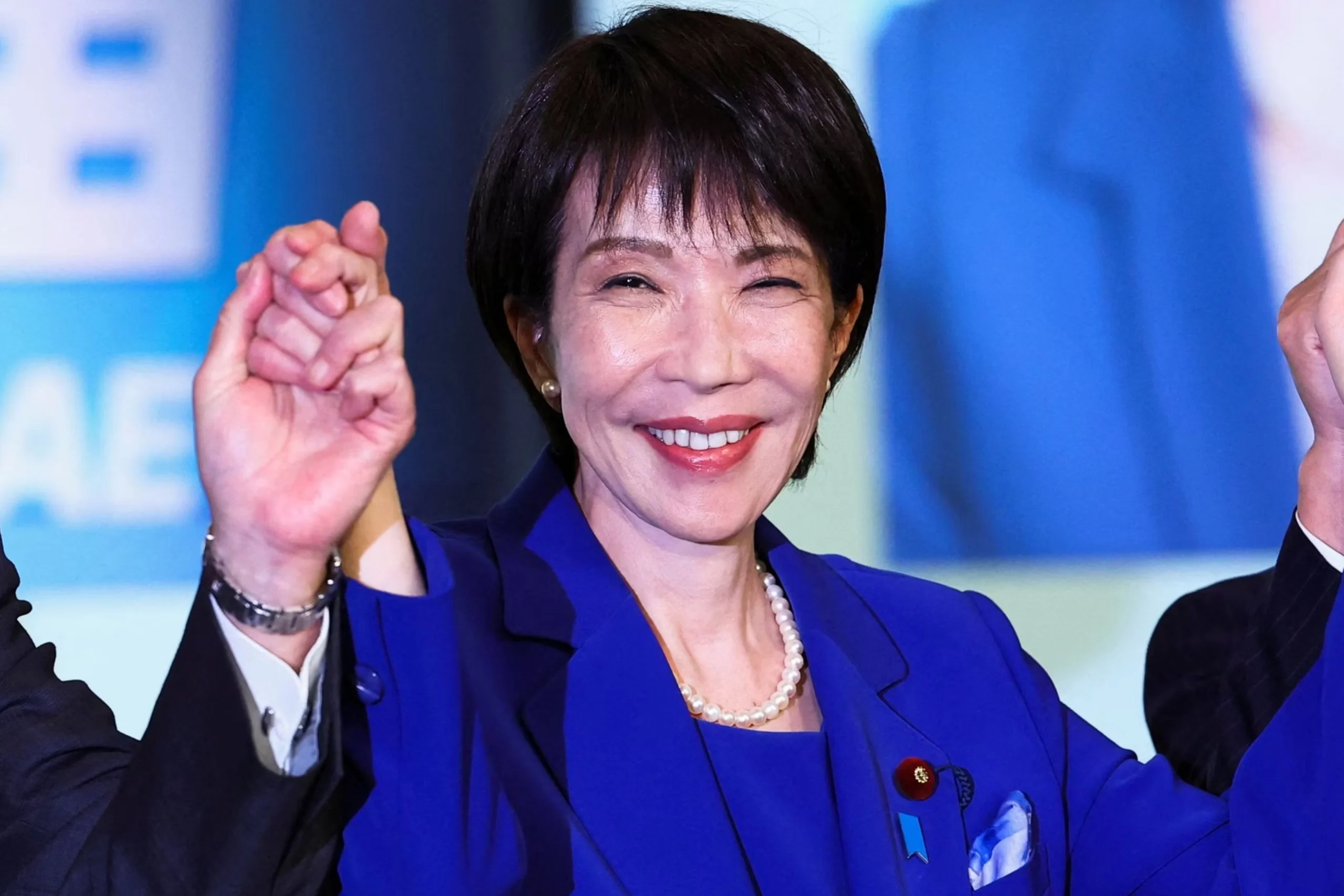
Image from Heute.at
On the morning of 21 October 2025, Japan broke one of its longest-standing political taboos: Sanae Takaichi was elected as the nation’s first-ever female Prime Minister.
The rise of Takaichi — president of the ruling Liberal Democratic Party (LDP) and a seasoned political figure — marks a deeply symbolic turning point for a country whose power structures have long been dominated by men. Yet, beyond the symbolism, the landscape ahead appears far more complex — and, in some ways, challenging.
How She Got There
At 64 years old, Takaichi made history after securing 237 votes in Japan’s lower house of parliament, narrowly surpassing the majority required.
Her election came amid political instability: the LDP had to form a last-minute coalition with the Japan Innovation Party (Ishin) to secure enough support to govern.
Politically, Takaichi’s trajectory aligns closely with the legacy of Shinzo Abe, reflecting both a conservative ideology and a nationalist vision. The press has noted that, while she is Japan’s “first woman” in the role, her agenda does not radically challenge the existing power structure.
Why This Matters Beyond Japan
Breaking ceilings and global visibility
Even in politically advanced societies, female leadership at the highest level remains rare. The fact that Japan — ranked 118th out of 148 countries in the 2025 Global Gender Gap Index — now has a woman leading the government sends a powerful message about possibility and progress.
Tension between symbolism and substance
Takaichi’s appointment has sparked debate over whether it represents a genuine shift in paradigm or merely a change in face. As highlighted by international media, she appointed only two women among her 19 cabinet ministers — a figure many see as insufficient to signal a true new era of equality.
Geopolitical and economic implications
Japan’s new Prime Minister takes office at a time of serious domestic and international challenges: rising inflation, strained relations with Asian neighbours, pressure to boost defence spending, and a sluggish economy seeking revitalisation.
Beyond these immediate issues, the “Japan case” is attracting global attention because it raises an essential question: does having women in power automatically translate into progressive gender policies or structural change?
What Comes Next
For gender politics:
Takaichi’s rise opens the door to new narratives — but the real test will be whether it leads to concrete reforms that enhance representation and opportunities for other women, or if this remains merely a symbolic milestone with limited impact.
For Japan on the world stage:
The “first woman” now leads a country long seen as a latecomer to gender equality — and the world will be watching not only who is in power, but what she does with that power.
For brands, networks and the global audience:
In an era where female leadership and representation are central to conversations in design, fashion, culture and business, Takaichi’s ascent offers a thought-provoking lens through which to explore how deeply rooted social structures either resist or evolve under new faces.


