

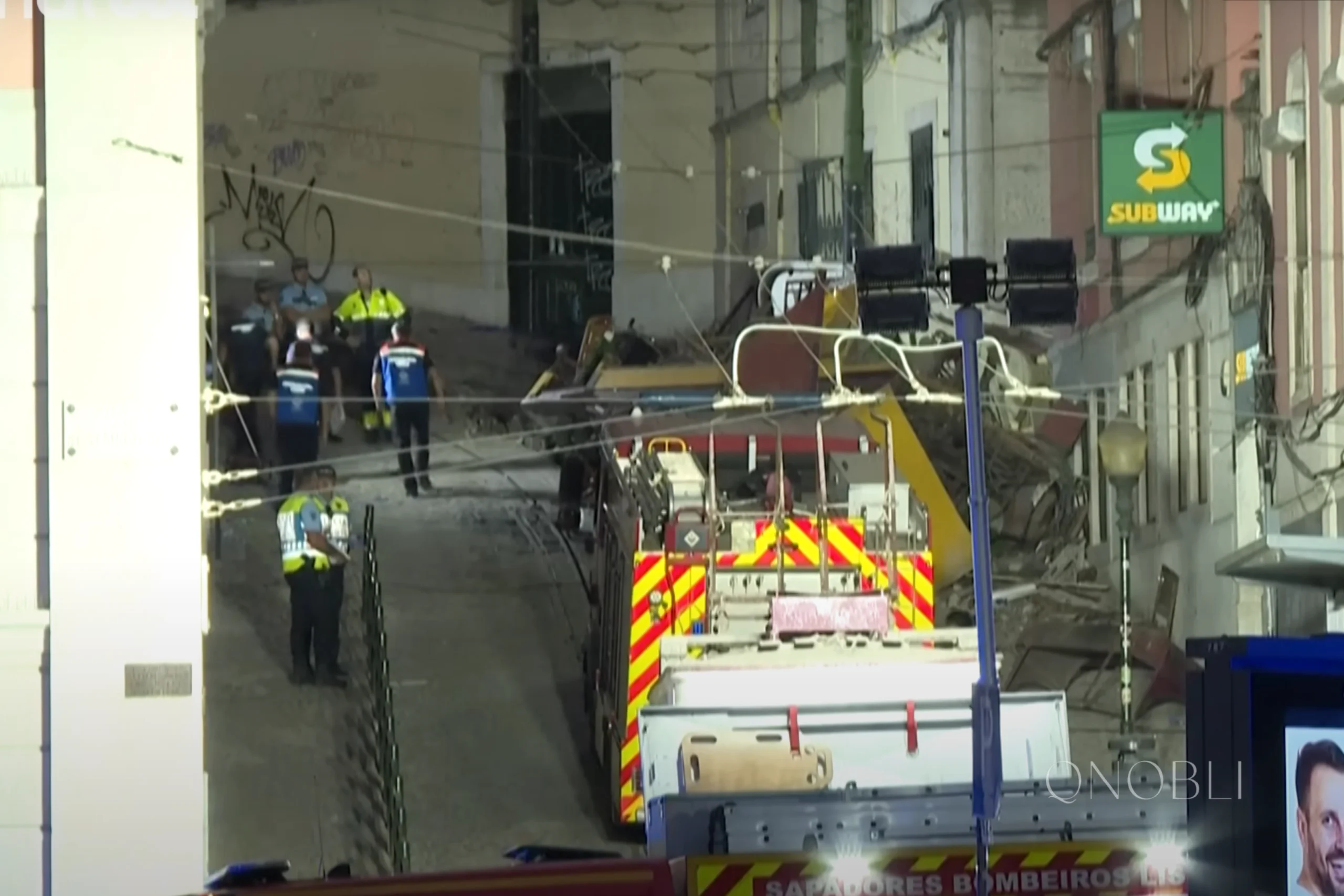
On the afternoon of 3 September 2025, the historic Elevador da Glória, a century-old funicular and cultural landmark of Lisbon, suffered a tragic derailment. At 6:05 p.m., a safety cable snapped, causing Car No. 1 to career out of control, crash into a building and overturn — a scene that resulted in the loss of lives and shook the entire city.
Updated figures
- 17 confirmed dead, including brakeman André Marques, who had worked for Carris for 15 years.
- 21 injured, with 5 in a serious condition — among them a three-year-old child who survived with minor injuries; her father died at the scene and her mother remains in critical condition.
- The injured include people of at least 10 different nationalities: Portuguese, Spanish, Italian, French, Swiss, Canadian, South Korean, Cape Verdean and Moroccan.
Reaction and ongoing investigation Tragedy at the Elevador da Glória
- The Portuguese government has declared a day of national mourning, while Lisbon City Council has announced three days of municipal mourning.
- The Judiciary Police, the Public Prosecutor’s Office and the GPIAAF (Office for the Prevention and Investigation of Railway and Aeronautical Accidents) have launched investigations to determine the causes of the accident.
- The operator Carris stated that all maintenance protocols had been rigorously observed, including daily, monthly and weekly inspections — the most recent maintenance took place between 26 August and 30 September 2024.
- The funicular is out of service, and other similar lines have been suspended as a preventive safety measure.
This tragedy goes beyond statistics — it marks the collapse of a symbol that connected people, history and the poetry of the city. Lisbon, in shock and mourning, now faces urgent questions: how can heritage be carefully preserved without compromising safety? And how can memory be transformed into legacy, with respect and responsibility?


