

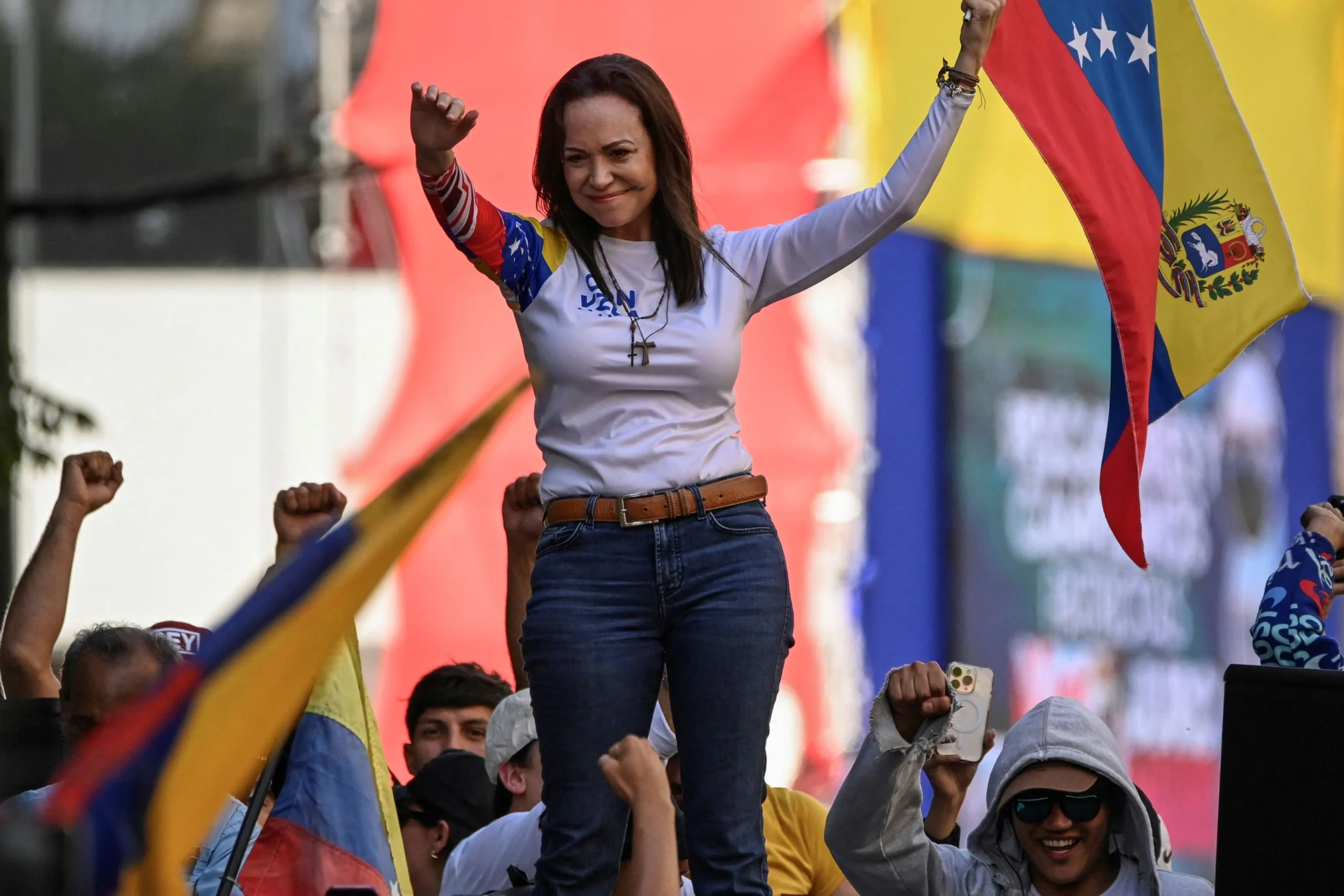
On the evening of 10 December 2025, the Nobel Peace Prize — one of the world’s most emblematic honours — was officially awarded to Venezuelan opposition leader María Corina Machado, in a moment that resonates far beyond the borders of Latin America. The announcement had been made in October, when the Norwegian Nobel Committee highlighted her long and persistent struggle to promote democracy, uphold human rights, and advocate for a peaceful transition from authoritarianism to a genuinely representative state in her country.
Machado, a prominent figure in the resistance against Nicolás Maduro’s regime, spent much of the last year in hiding in Venezuela, escaping intense repression that forced her into internal exile after her attempt to run in the 2024 presidential elections was blocked by the government. This year’s Nobel Prize is, in itself, a powerful symbol: it not only celebrates her personal journey but also represents the suffering and hope of millions of Venezuelans facing a severe humanitarian, political and economic crisis under the current regime.
Due to these circumstances, Machado was unable to attend the ceremony in Oslo — her daughter, Ana Corina Sosa Machado, accepted the prize on her behalf, delivering the acceptance speech as she did last night. In the speech, she emphasised the profound meaning of the award, reminding the world that democracy is essential for peace and dedicating the recognition to victims of repression, relatives of political prisoners, and all those who mobilise for freedom and justice.
The Nobel awarded to Machado is not merely an individual tribute, but a collective narrative. The Norwegian Committee justified its decision as a recognition of her tireless work in pursuit of free elections, the separation of powers, civil rights and the restoration of democratic institutions in a country where such efforts have become acts of courage. This brings the Venezuelan crisis — marked by more than eight million refugees and displaced people, and by a deep erosion of civil liberties — to the forefront of the international debate on peace, justice and human rights.
Furthermore, the prize has intensified global attention on Venezuela: political leaders, activists and international organisations have acknowledged the importance of the struggle for democracy at a time when authoritarian regimes and threats to civil liberties are gaining ground in various parts of the world. For many observers, the Nobel Committee’s decision also serves as a warning about the importance of peaceful resistance, civic mobilisation and global solidarity in the face of states that suppress dissent.
Machado’s journey to Oslo — including her secret departure from Venezuela and her first public appearance in nearly a year — was greeted by supporters who chanted for freedom and displayed a spirit of hope in the Norwegian capital. Meanwhile, her return to the country remains uncertain due to the ongoing risk of persecution, but the forceful recognition of her trajectory provides symbolic and moral momentum for the Venezuelan opposition and for defenders of democracy worldwide.
The 2025 Nobel Peace Prize awarded to María Corina Machado is more than a trophy: it is a mirror of the tensions between authority and freedom, an example of civic courage, and a reminder that the path to truly peaceful societies lies in the defence of fundamental rights of expression, participation and representation — principles that underpin the very idea of lasting peace.


