
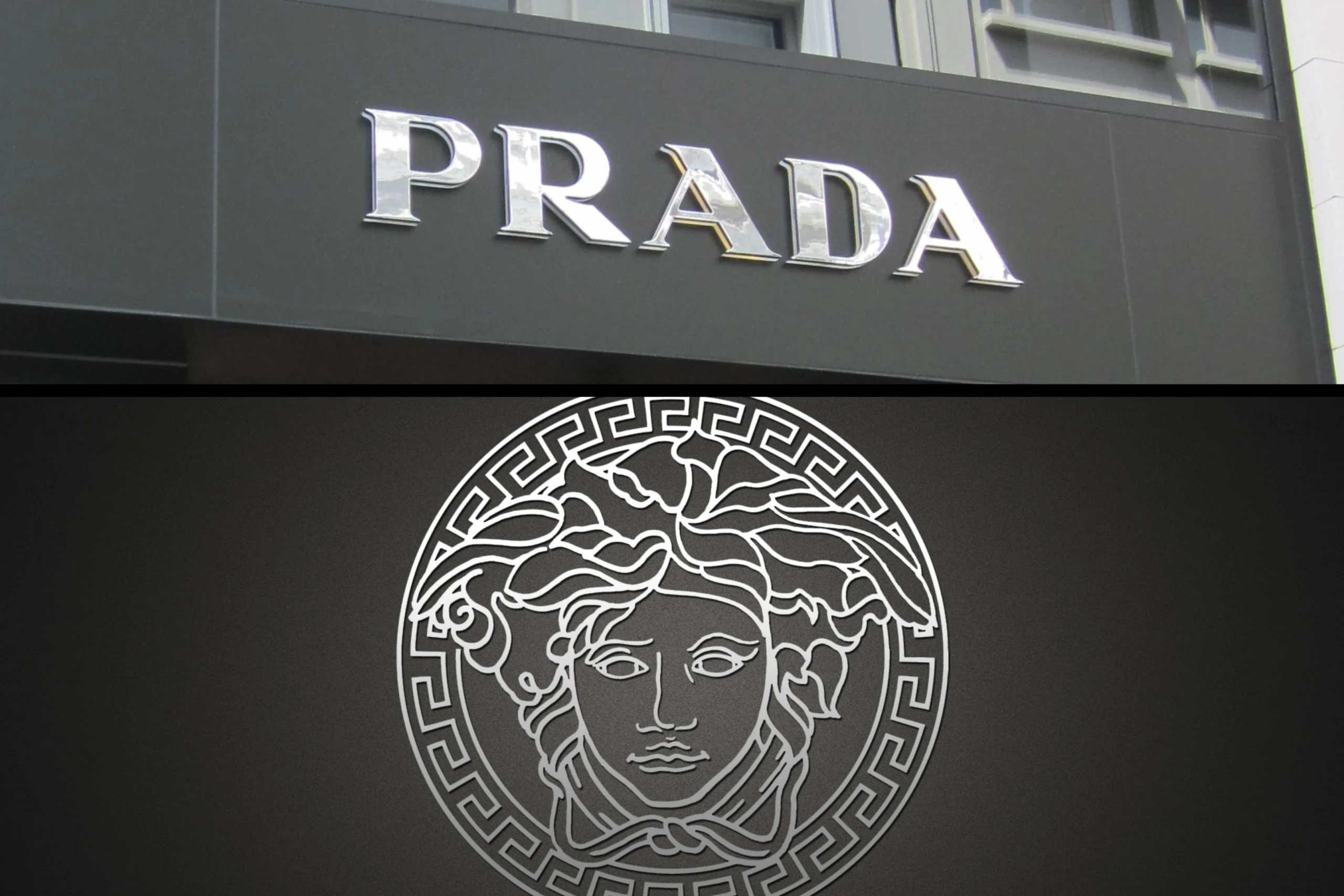
The luxury fashion market has just gained one of the most significant chapters of the decade: the Prada Group has finalised the acquisition of Versace for around US$1.4 billion — closing a turbulent period of transition and opening the door to a new balance of power in international fashion.
The house founded by Gianni Versace returns to Italian hands. For Prada — known for its intellectual minimalism and solid industrial structure — Versace represents the opposite: boldness, glamour and a maximalist aesthetic. The merger brings together coherence, contrast and strategic potential.
What changes — and what stays
Versace’s new leadership will fall under Lorenzo Bertelli — Prada heir and now appointed executive chairman of the maison.
Creative direction will be led by Dario Vitale, formerly of Miu Miu, who has already been working on repositioning Versace since Donatella Versace’s departure.
Prada has pledged to preserve Versace’s iconic DNA — its colours, boldness and unmistakable signature — while bringing its supply-chain structure, industrial know-how and luxury brand management expertise.
Context and challenges
Versace had been facing difficulties under its previous ownership: falling sales, shifts in the global luxury market and changes in consumer habits after the pandemic. The decision by former owner Capri Holdings to sell the brand represented an attempt at restructuring.
For Prada, the acquisition makes strategic sense: it expands the group’s global presence and diversifies its portfolio, offering consumers both Prada’s sophisticated minimalism and Versace’s exuberant glamour. The bet is that the combination of identities will complement audiences and broaden market opportunities.
What to watch closely
Creative balance — Preserving the spirit of Versace without diluting its identity will be the greatest test; Dario Vitale’s role is not only technical but symbolic.
Operational synergy — The promise of leveraging Prada’s industrial infrastructure to boost efficiency and scale, without sacrificing exclusivity.
Market and consumer reaction — Contemporary luxury relies on authenticity. Customers’ reception and media perception will determine whether the union is viewed as a strengthening or an overlap.
Impact on the global landscape — The acquisition reshapes the balance among major maisons and conglomerates, reinforcing Italy’s leadership against giants such as LVMH and Kering.
This acquisition goes far beyond a financial manoeuvre — it is a play of identity, legacy and future vision. The union of Prada and Versace symbolises the complex dance between heritage and innovation, austerity and opulence, tradition and reinvention.
The luxury of tomorrow may lie not only in the name on the label, but in the strategy behind it.


