

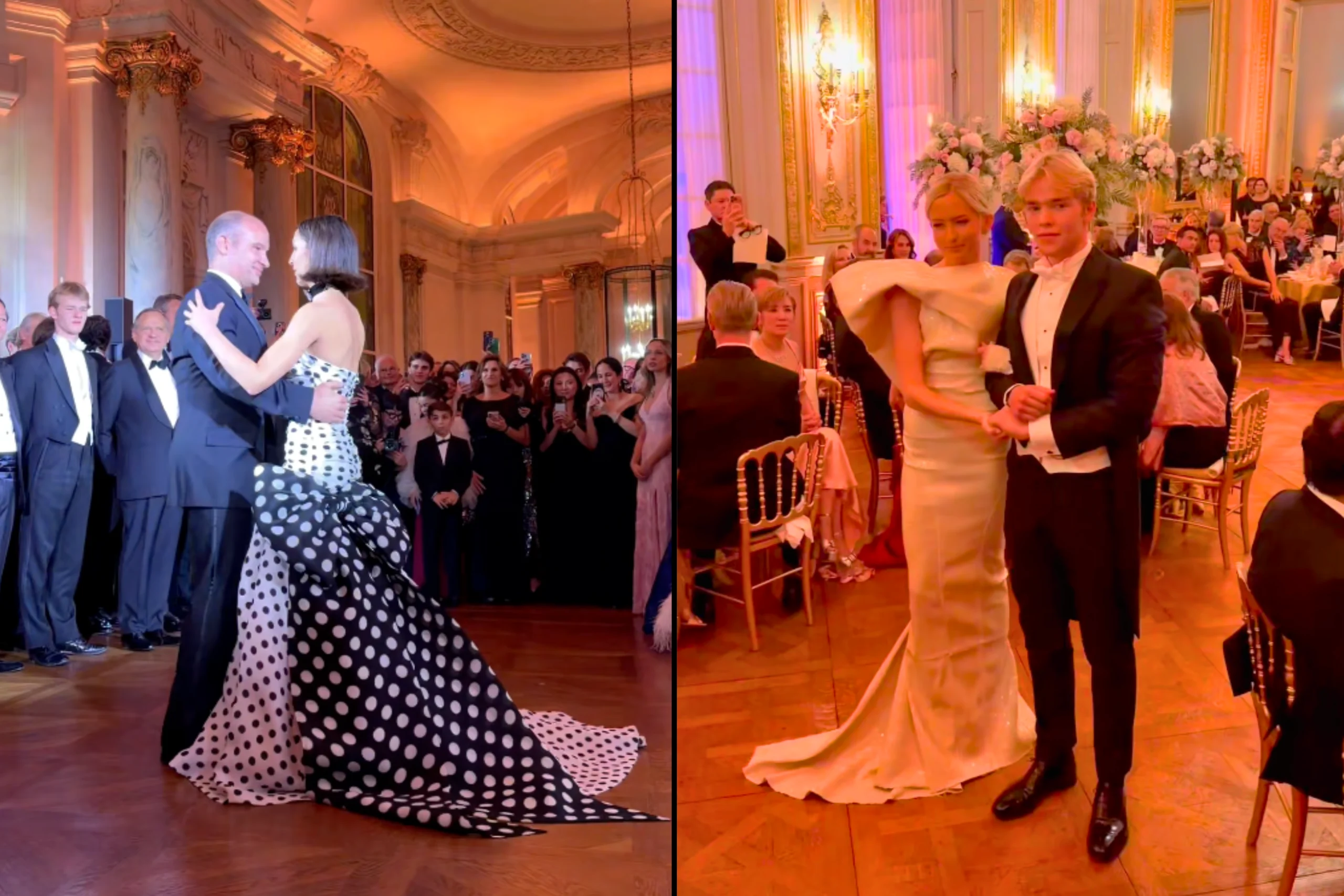
On the evening of 29 November 2025, the ballroom of the Shangri-La Paris shone with the 2025 edition of Le Bal des Débutantes, the most exclusive and anticipated ball of the global high society calendar. Nineteen young women — heiresses from royal and aristocratic families, as well as from the worlds of fashion, film, business or celebrity — made their official debut in society, accompanied by their cavaliers.
To understand the significance of this gathering, it is essential to look back at the origins of the event. The original Le Bal dates to 1958, when it was first held at the Palace of Versailles as a classic “debutante ball”. After being suspended in 1968, it was reinvented in 1992 by Ophélie Renouard, becoming a contemporary symbol of elegance, sophistication and international visibility — a transformation that shaped what is now considered the “Met Gala of debutantes”.
Looks and visual heritage
As always, fashion took centre stage. Young Carolina Lansing, granddaughter of legendary designer Carolina Herrera, wore a black-and-white polka-dot gown by Wes Gordon, directly inspired by the maison’s Spring 2025 collection — an elegant tribute to the family’s roots and the brand’s fashion legacy.
Among the standout debutantes was Bronwyn Golden Vance, daughter of actors Angela Bassett and Courtney B. Vance, who dazzled in a haute couture gown by Stéphane Rolland, embodying the blend of royalty, celebrity and youth that defines the event.
Also present at the ball were members of Europe’s royal and aristocratic families — such as Eulalia d’Orléans Bourbon — showing that, even in the contemporary era, Le Bal retains its deep connection to tradition, lineage and historical heritage.
More than a party: purpose and global visibility
Le Bal is not merely a spectacle of lavish gowns and noble titles: since its reinvention, the event has also carried a social purpose — part of the funds and visibility it generates is directed to charitable institutions, often supporting causes such as children’s health, education and vulnerable communities.
Furthermore, in 2025, the ball reinforces its role as a global platform for young women of various nationalities — a stage where tradition, modernity and media visibility converge, and where the new generation steps into society and into a universe of opportunities, networks and influence.
Between tradition and modernity
The value of Le Bal lies not only in the sparkle of crowns and dresses, but also in its ability to provoke reflection: on heritage, identity, fashion, and the ways in which we build networks of belonging and influence in the 21st century.
This year, Le Bal 2025 reaffirmed its place as one of the world’s most influential events in fashion and society — and proved that, even in the digital age, there is still room for tradition, elegance and debutantes dressed in dreams.


