

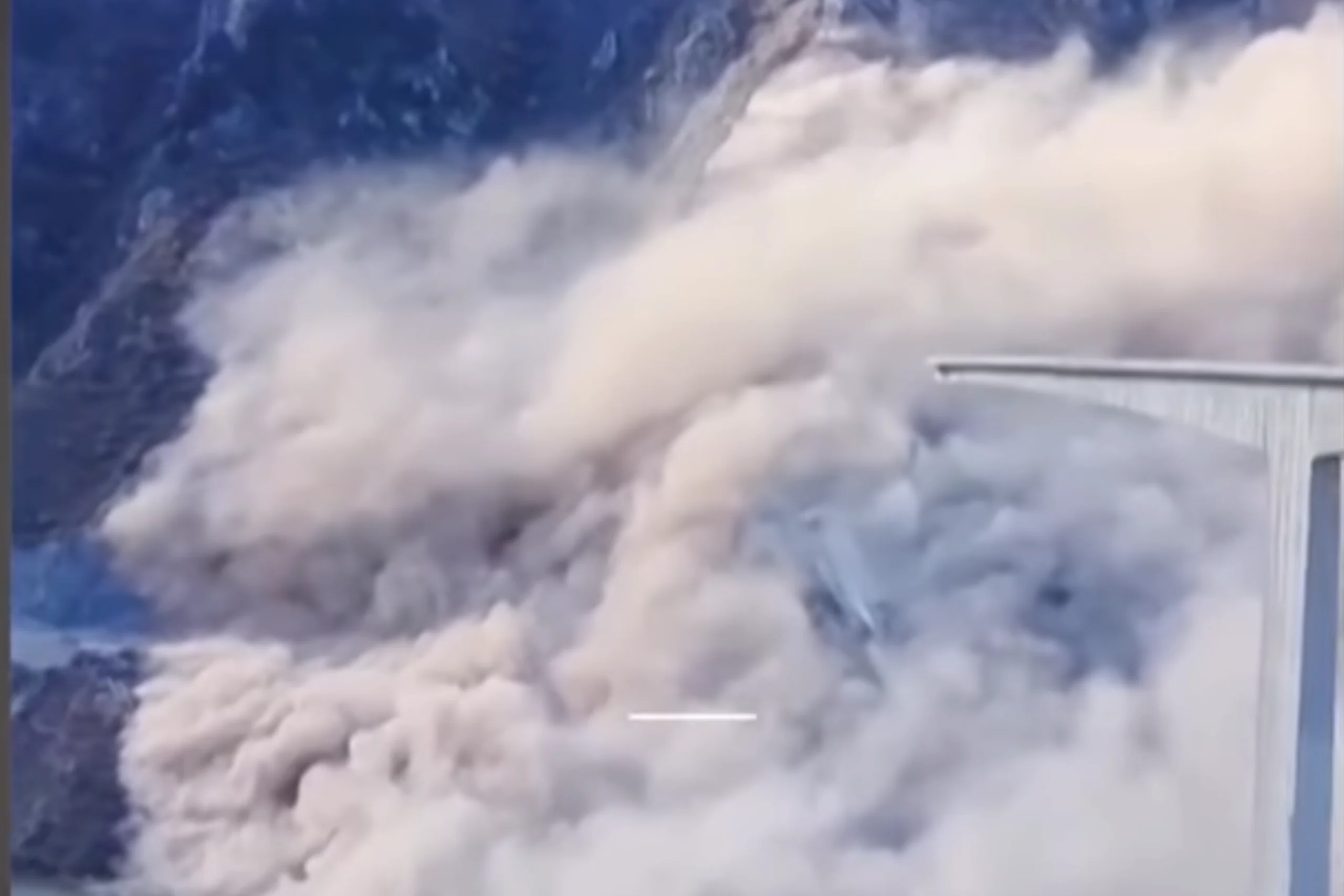
On Tuesday, 11 November 2025, a section of the Hongqi Bridge — a new 758-metre structure located in Sichuan province, south-west China — partially collapsed, leaving behind dramatic scenes of concrete and smoke amidst the mountains. The bridge formed part of the national highway linking Sichuan to Tibet, and had been completed only a few months earlier — construction finished at the beginning of the year and it was inaugurated in April.
Local authorities had closed the bridge to traffic the day before the collapse, after detecting cracks in the road surface and signs of imminent landslides on nearby slopes. On the afternoon of the incident, landslides triggered by ground instability caused the approach to the bridge and the adjacent carriageway to give way — fortunately, no casualties have been reported so far.
The event reignites a wider international debate: on one hand, China has been investing at high speed in infrastructure — bridges, roads, tunnels — particularly in remote or mountainous regions, aiming to connect the country’s interior with its coastal hubs. On the other, this rapid pace of development brings exposure to physical risks such as landslides, unstable soils, and insufficient monitoring — all of which place pressure on safety and sustainability standards.
Beyond the technical and engineering implications, there is also a symbolic dimension: when a bridge designed to be an icon becomes a scene of failure, the cost is not only measured in concrete — but in trust. For those who follow trends in lifestyle, culture, and urban development, such events highlight that the “luxury” of modern infrastructure does not lie in what is grand or imposing, but in what is safe, thoughtful, and enduring.
China sought to link remote valleys, shorten distances, and affirm progress — yet it was there, amid mountains undermined by geological tension and sudden water flows, that nature reminded us no structure is entirely beyond its reach.
In short, the partial collapse of the Hongqi Bridge stands as both a warning and an opportunity: a warning that our world’s style — futuristic, connected, fast — demands a balance between ambition and reality, a balance that sometimes fails. And an opportunity, because each failure reveals what tomorrow must build upon: safety, resilience, and awareness.


